


 September 9, 2026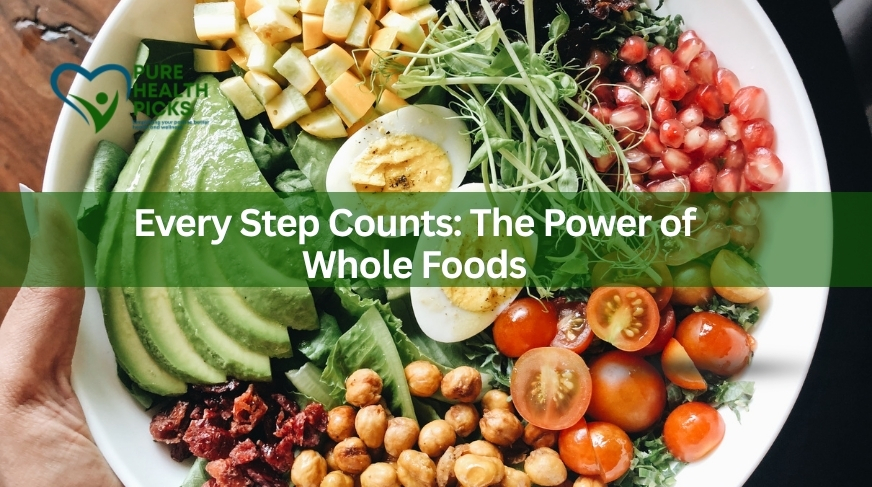
Whole foods are foods that are minimally processed and remain relatively close to their natural form. Fruits, vegetables, whole grains, beans, lentils, nuts, seeds, and other nutrient-dense foods can form the foundation of a healthy eating pattern. Choosing more whole foods can help increase fiber, vitamins, minerals, and other beneficial nutrients while making it easier to reduce reliance on foods high in added sugars, sodium, refined carbohydrates, and other ingredients that are often limited in healthy eating patterns. The CDC recommends emphasizing nutrient-dense foods including vegetables, fruits, whole grains, protein foods, healthy fats, and other minimally processed choices.
Wellness does not happen in one giant leap.
It happens through everyday choices.
The breakfast you make in the morning.
The snack you choose in the afternoon.
The vegetables you add to dinner.
The water you drink instead of a sugary beverage.
The walk you take after work.
And the foods you consistently bring into your home.
That is where the power of whole foods becomes important.
Whole foods are not a miracle diet. They are not a shortcut to perfect health. And choosing whole foods does not mean you can never eat packaged or processed foods.
Instead, whole foods give you a practical foundation for building a more nutrient-dense eating pattern.
The CDC’s current healthy-eating guidance emphasizes vegetables, fruits, whole grains, protein foods, healthy fats, and other nutrient-dense choices while recommending limits on highly processed foods, added sugars, sodium, and refined carbohydrates.
The goal is simple:
Choose real, nutrient-rich foods more often—and make healthy choices easier to repeat.
Table of Contents
- What Are Whole Foods?
- Why Do Whole Foods Matter?
- Whole Foods vs. Highly Processed Foods
- The Five Building Blocks of a Whole-Food Eating Pattern
- Fruits and Vegetables
- Whole Grains
- Beans and Legumes
- Nuts and Seeds
- Protein Foods
- Whole Foods and Fiber
- Whole Foods and Heart Health
- Whole Foods and Healthy Weight
- How to Build a Whole-Food Plate
- Whole-Food Breakfast Ideas
- Whole-Food Snack Ideas
- How to Shop for Whole Foods
- Common Whole-Food Mistakes
- A Simple 7-Day Whole-Food Challenge
- Frequently Asked Questions
- Final Thoughts
What Are Whole Foods?
The phrase “whole foods” does not have one universal legal definition.
In everyday nutrition conversations, it generally refers to foods that are minimally processed and remain relatively close to their original form.
Examples include:
- Apples
- Berries
- Oranges
- Broccoli
- Spinach
- Carrots
- Sweet potatoes
- Oats
- Brown rice
- Quinoa
- Beans
- Lentils
- Chickpeas
- Nuts
- Seeds
- Eggs
- Fish
- Poultry
- Other minimally processed protein foods
This does not mean every packaged food is unhealthy.
Frozen vegetables, canned beans, plain yogurt, canned fish, and other convenient foods can still fit into a healthy eating pattern.
In fact, CDC guidance specifically notes that fresh, frozen, and appropriately selected canned fruits and vegetables can all be healthy options.
The better question is not:
“Is this food processed?”
Instead ask:
“How does this food fit into my overall eating pattern?”
Why Do Whole Foods Matter?
Whole and minimally processed foods can make it easier to build meals around nutrient-dense ingredients.
Fruits and vegetables provide vitamins, minerals, fiber, water, and other substances important for health. Whole grains, legumes, nuts, and seeds can contribute fiber and other nutrients. Protein foods provide essential nutrients needed by the body.
This is important because healthy eating is not simply about removing one ingredient.
It is about what you add.
Instead of only thinking:
“Eat less sugar.”
Think:
“What nutritious food can I add to this meal?”
Instead of:
“Avoid processed foods.”
Think:
“Can I build more of this meal around vegetables, fruit, whole grains, legumes, nuts, seeds, or another nutrient-dense food?”
That shift makes healthy eating more practical.
Whole Foods vs. Highly Processed Foods
Processed food exists on a spectrum.
Some processing can make food safer, more convenient, or easier to store.
For example:
- Frozen vegetables
- Canned beans
- Plain yogurt
- Oatmeal
- Canned tuna
- Frozen berries
can all be useful components of a nutritious diet.
The bigger concern is relying heavily on highly processed foods that are high in added sugars, sodium, saturated fat, or refined carbohydrates.
Current CDC guidance encourages people to prioritize nutrient-dense foods and limit highly processed foods, added sugars, and sodium.
So a realistic whole-food approach is not:
“Never eat anything packaged.”
It is:
“Make nutrient-dense foods the foundation of your meals more often.”
The Five Building Blocks of a Whole-Food Eating Pattern
A simple whole-food framework can be built around five categories.
1. Fruits and Vegetables
Aim for variety.
Different colors often mean different nutrients and plant compounds.
2. Whole Grains
Choose foods such as oats, brown rice, barley, quinoa, and whole-grain breads or cereals.
3. Beans and Legumes
Beans, peas, lentils, and chickpeas provide plant protein and fiber.
4. Nuts and Seeds
These can provide healthy fats, protein, fiber, vitamins, and minerals.
5. Quality Protein Foods
Depending on your preferences, this can include fish, seafood, eggs, poultry, beans, lentils, soy foods, nuts, seeds, and other protein sources.
CDC guidance recommends variety among protein foods, including seafood, meat, poultry, eggs, legumes, soy products, nuts, and seeds.
Fruits and Vegetables: Start With Color
One of the easiest ways to improve a meal is to increase its variety of fruits and vegetables.
Think beyond the standard salad.
Try:
- Spinach
- Broccoli
- Bell peppers
- Tomatoes
- Carrots
- Mushrooms
- Cabbage
- Sweet potatoes
- Berries
- Oranges
- Apples
- Kiwi
- Mango
The CDC recommends aiming for a variety of colors because different fruits and vegetables provide different vitamins, minerals, fiber, and other beneficial substances.
A Simple Rule
When preparing a meal, ask:
“What color is missing from my plate?”
Then add one.
That single question can make meals more varied without requiring calorie counting or complicated meal plans.
Whole Grains: Make the Switch Gradually
Whole grains contain the entire grain kernel, including components that are removed during refining.
Examples include:
- Oats
- Brown rice
- Barley
- Quinoa
- Whole-wheat bread
- Whole-grain pasta
Choosing whole grains more often can be a practical way to increase fiber and improve the nutrient density of meals.
Try simple substitutions:
White bread → whole-grain bread
Refined breakfast cereal → oatmeal
White rice → brown rice or another whole grain
Refined crackers → whole-grain crackers
You do not need to replace everything simultaneously.
One substitution is enough to begin.
Beans and Legumes: An Underrated Whole Food
Beans and legumes are nutritional workhorses.
They can contribute:
- Fiber
- Plant protein
- Vitamins
- Minerals
- Texture
- Satiety
Examples include:
- Black beans
- Kidney beans
- Chickpeas
- Lentils
- Pinto beans
- Split peas
- Green peas
Add them to:
- Salads
- Soups
- Grain bowls
- Wraps
- Curries
- Stews
- Homemade dips
The CDC specifically recommends beans and lentils as practical ways to increase fiber.
Nuts and Seeds: Small Foods, Big Nutritional Value
Nuts and seeds can be easy additions to meals and snacks.
Try:
- Almonds
- Walnuts
- Pistachios
- Peanuts
- Chia seeds
- Flaxseeds
- Pumpkin seeds
- Sunflower seeds
Add them to oatmeal, yogurt, salads, smoothies, or fruit.
Because nuts and seeds are energy-dense, portion awareness can still be useful. Healthy does not mean unlimited.
Whole Foods and Fiber
Fiber is one of the strongest connections between whole-food nutrition and digestive health.
Good sources include:
- Fruits
- Vegetables
- Whole grains
- Beans
- Lentils
- Nuts
- Seeds
The CDC states that fiber supports digestive health, helps people feel fuller longer, can help control blood sugar, and can lower cholesterol.
This is why the Pure Health Picks topic “Eat More Fiber” fits naturally within the larger Power of Whole Foods content cluster.
Think of the relationship as:
Whole Foods → More Fiber → Better Dietary Quality
rather than treating fiber as an isolated nutrient.
Whole Foods and Heart Health
Heart health is influenced by many factors, including physical activity, blood pressure, cholesterol, smoking, genetics, and overall diet.
Food is one important piece of that picture.
The CDC recommends eating plenty of fruits and vegetables and fewer processed foods as part of heart-disease prevention. It also notes that foods high in fiber and lower in saturated and trans fats can help prevent high cholesterol.
A heart-conscious meal could include:
- Vegetables
- Whole grains
- Beans
- Fish or another protein
- Nuts or seeds
- Healthy fats
The goal is not one “heart-healthy superfood.”
It is the pattern.
Whole Foods and Healthy Weight
Whole foods are sometimes promoted as a guaranteed weight-loss solution.
That is too simplistic.
However, many whole foods—including vegetables, fruits, whole grains, legumes, and nuts—can be part of a healthy weight-management pattern. Fruits and vegetables also provide water and fiber, which can contribute to fullness.
The CDC emphasizes that overall calorie intake, nutrition, physical activity, sleep, age, genetics, and medications can all influence weight.
So instead of asking:
“Which whole food burns fat?”
Ask:
“How can I make my meals more nutrient-dense and satisfying?”
That is a much more sustainable question.
How to Build a Whole-Food Plate
Use this simple framework:
Step 1: Add vegetables or fruit
Make plants a visible part of the meal.
Step 2: Add a protein source
Choose fish, eggs, poultry, beans, lentils, tofu, nuts, seeds, or another preferred protein.
Step 3: Add a whole grain or another nutrient-dense carbohydrate
Try oats, brown rice, quinoa, barley, or whole-grain bread.
Step 4: Add a healthy fat
Consider nuts, seeds, avocado, or olive oil.
Step 5: Add flavor
Use herbs, spices, citrus, garlic, vinegar, or other flavorful ingredients.
This framework is flexible enough for different cuisines, budgets, preferences, and schedules.
Whole-Food Breakfast Ideas
Your first meal is an opportunity to build a strong nutritional foundation.
Oatmeal Bowl
Oats + berries + nuts + seeds.
Vegetable Egg Breakfast
Eggs + spinach + tomatoes + peppers + whole-grain toast.
Yogurt Bowl
Plain yogurt + berries + nuts + seeds.
Avocado Toast
Whole-grain toast + avocado + vegetables + eggs if desired.
The CDC recommends options such as oatmeal with berries, pumpkin seeds, or almonds as ways to increase fiber and nutrient density.
Whole-Food Snack Ideas
Instead of thinking of snacks as an excuse to eat highly processed foods, make them another opportunity to add nutrients.
Try:
- Apple + almonds
- Banana + peanut butter
- Carrots + hummus
- Berries + plain yogurt
- Roasted chickpeas
- Fresh fruit + nuts
- Vegetable slices + bean dip
- Unsalted nuts + fruit
The CDC recommends options including whole fruits, vegetables with hummus, edamame, roasted chickpeas, and nuts as nutrient-dense snack choices.
How to Shop for More Whole Foods
Healthy eating begins before you reach the kitchen.
It starts at the grocery store.
Shop the perimeter—but don’t rely on it blindly
Fresh produce is often located around the store’s perimeter, but nutritious foods can also be found in aisles.
Examples:
- Oats
- Beans
- Lentils
- Brown rice
- Canned vegetables
- Frozen vegetables
- Frozen fruit
- Nuts
- Seeds
Keep a simple grocery list
Include:
3 vegetables
1–2 nuts or seeds
1 healthy snack
This makes healthy choices easier before hunger influences the decision.
Don’t Fear Frozen and Canned Foods
A common misconception is that only fresh foods count as healthy whole-food choices.
That’s not necessarily true.
The CDC notes that frozen or canned fruits and vegetables can be nutritious options. For canned vegetables, look for lower-sodium options; for canned or frozen fruits, choose products without added sugars or syrup when possible.
Convenience can actually help healthy eating become more sustainable.
Frozen broccoli that takes five minutes to prepare may be a better practical choice than buying fresh broccoli that sits unused in your refrigerator.
The best healthy food is often the one you will actually eat.
Common Whole-Food Mistakes
Mistake 1: Thinking Whole Foods Must Be Expensive
Beans, lentils, oats, potatoes, seasonal vegetables, bananas, and other staples can be budget-friendly.
Mistake 2: Believing Fresh Is Always Better
Frozen and appropriately selected canned foods can also fit into a nutritious diet.
Mistake 3: Eliminating Entire Food Groups
Healthy eating is about variety and balance, not unnecessarily restrictive rules.
Mistake 4: Assuming “Natural” Means Healthy
Marketing words are not a substitute for reading nutrition labels and ingredient lists.
Mistake 5: Eating Only Salads
Whole-food nutrition can include warm meals, soups, curries, grain bowls, sandwiches, breakfasts, and snacks.
Mistake 6: Trying to Change Everything Overnight
Small sustainable changes usually make a better long-term strategy than an extreme reset.
Mistake 7: Ignoring Your Personal Needs
Food choices should account for allergies, medical conditions, dietary preferences, cultural foods, budget, and lifestyle.
A Simple 7-Day Whole-Food Challenge
Day 1 — Add Fruit
Include one whole fruit with breakfast or as a snack.
Day 2 — Add Vegetables
Add an extra vegetable to lunch or dinner.
Day 3 — Choose Whole Grains
Replace one refined grain with a whole-grain alternative.
Day 4 — Eat Legumes
Add beans, lentils, or chickpeas to one meal.
Day 5 — Upgrade Your Snack
Choose fruit, vegetables, nuts, seeds, yogurt, or another nutrient-dense option.
Day 6 — Cook One Meal at Home
Use mostly whole or minimally processed ingredients.
Day 7 — Build a Balanced Plate
Combine vegetables or fruit, protein, a whole grain or other nutrient-dense carbohydrate, and a healthy fat.
Then repeat the changes that felt easiest.
That’s how habits become sustainable.
Frequently Asked Questions
What are whole foods?
Whole foods are generally foods that are minimally processed and remain relatively close to their natural form, such as fruits, vegetables, whole grains, beans, lentils, nuts, and seeds.
Are whole foods healthier than processed foods?
Not every processed food is unhealthy. However, current CDC guidance recommends emphasizing nutrient-dense foods and limiting highly processed foods, added sugars, sodium, and refined carbohydrates.
What are the best whole foods to eat every day?
A varied combination of vegetables, fruits, whole grains, legumes, nuts, seeds, and appropriate protein foods is a strong foundation for a healthy eating pattern.
Are frozen vegetables healthy?
Yes. The CDC notes that frozen vegetables can be nutritious options. When choosing canned vegetables, look for lower-sodium options when possible.
Are canned beans healthy?
Canned beans can be a convenient source of fiber and plant protein. Check the label and consider lower-sodium varieties when available.
Are whole foods good for digestion?
Many whole foods—including fruits, vegetables, whole grains, beans, and other fiber-rich foods—can support a healthy digestive system.
Can whole foods help with weight management?
Whole foods can be part of a healthy weight-management pattern, but weight is influenced by many factors, including overall calorie intake, physical activity, sleep, genetics, age, and medications.
Do I need to stop eating processed foods?
No. A realistic approach is to prioritize nutrient-dense whole and minimally processed foods more often while limiting highly processed foods that are high in added sugars, sodium, or other nutrients you may be trying to reduce.
What is the easiest way to start eating more whole foods?
Start with one meal. Add a fruit or vegetable, choose a whole grain, include a protein source, and make the meal satisfying enough to repeat.
Can whole-food eating work on a budget?
Yes. Beans, lentils, oats, potatoes, seasonal produce, frozen vegetables, and other basic foods can be practical choices. Planning meals and using foods before they spoil can also reduce waste.
Final Thoughts: Every Step Counts
Healthy eating does not have to be complicated.
And you certainly do not need to change your entire lifestyle tomorrow.
Start with one meal.
Add one vegetable.
Choose one whole grain.
Eat one piece of fruit.
Add beans to a salad.
Choose nuts instead of a highly processed snack.
Cook one meal at home.
Drink water with it.
Then do it again tomorrow.
Every step counts.
The power of whole foods is not that one particular food can transform your health.
The power is in the pattern.
A pattern that regularly includes vegetables, fruits, whole grains, legumes, nuts, seeds, protein foods, healthy fats, and other nutrient-dense choices can provide a stronger nutritional foundation for everyday wellness. Current CDC guidance supports this broader approach to healthy eating.
And that is the philosophy behind Pure Health Picks:
Simple choices. Better information. Healthier everyday habits.
Start Today
At your next meal, ask yourself three questions:
You don’t need every answer today.
Just take the next step.