
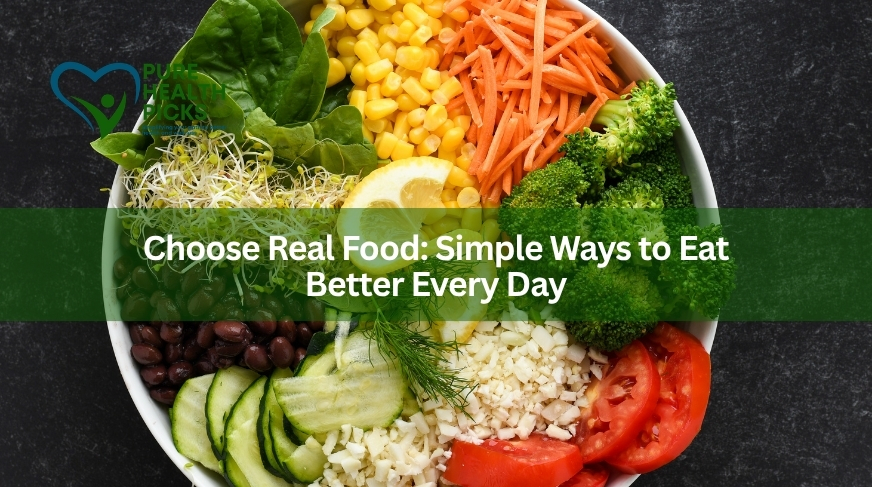
Healthy eating does not need to involve expensive ingredients, strict food rules, or complicated recipes. One practical approach is to choose more foods that retain their natural nutritional value and rely less often on products high in added sugars, sodium, or refined carbohydrates. The idea behind choosing real food is…...
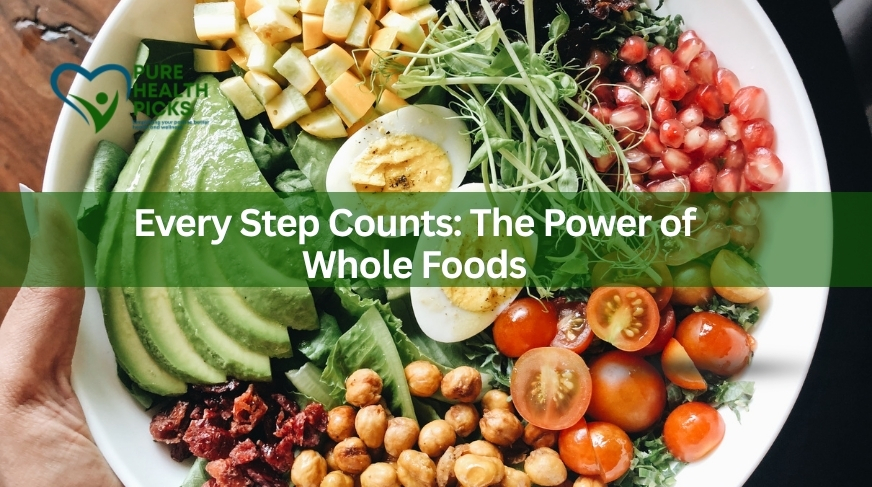
Whole foods are foods that are minimally processed and remain relatively close to their natural form. Fruits, vegetables, whole grains, beans, lentils, nuts, seeds, and other nutrient-dense foods can form the foundation of a healthy eating pattern. Choosing more whole foods can help increase fiber, vitamins, minerals, and other beneficial…...
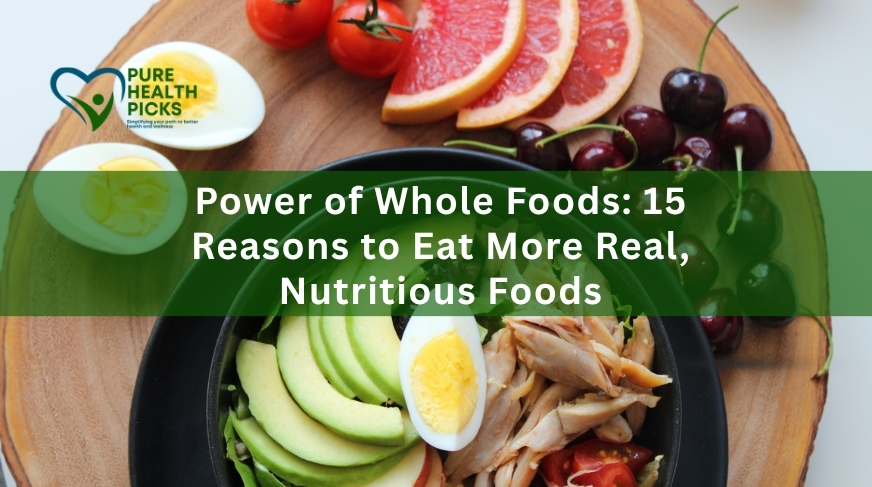
The power of whole foods comes from their ability to provide a wide range of nutrients within a balanced eating pattern. Fruits, vegetables, whole grains, legumes, nuts, seeds, and other minimally processed foods can provide fiber, vitamins, minerals, protein, healthy fats, and other beneficial nutrients. WHO's current healthy-diet guidance identifies…...
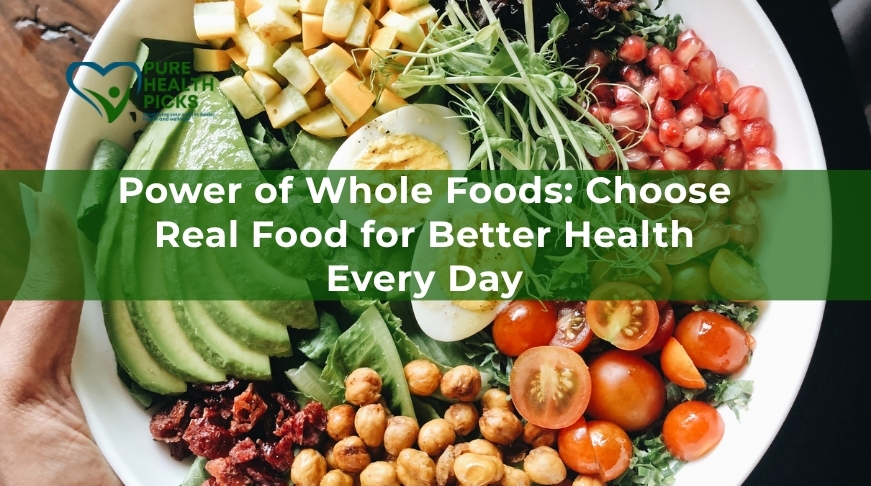
Whole foods are foods that are minimally processed and retain most of their natural nutrients. Eating more whole foods—such as fruits, vegetables, whole grains, legumes, nuts, seeds, lean proteins, and healthy fats—can support heart health, digestion, energy levels, and overall well-being while reducing reliance on highly processed foods....
Stay informed in the ever-evolving world of wellness with PureHealthPicks. Join our community for expert tips, honest reviews, and exclusive health insights.
We provide honest health and wellness product reviews, expert tips, and simple guides to help you make smarter, healthier lifestyle choices every day.
Copyright © All Rights Reserved. Designed and Developed by Web Craftrix .


 October 13, 2026