


 August 14, 2026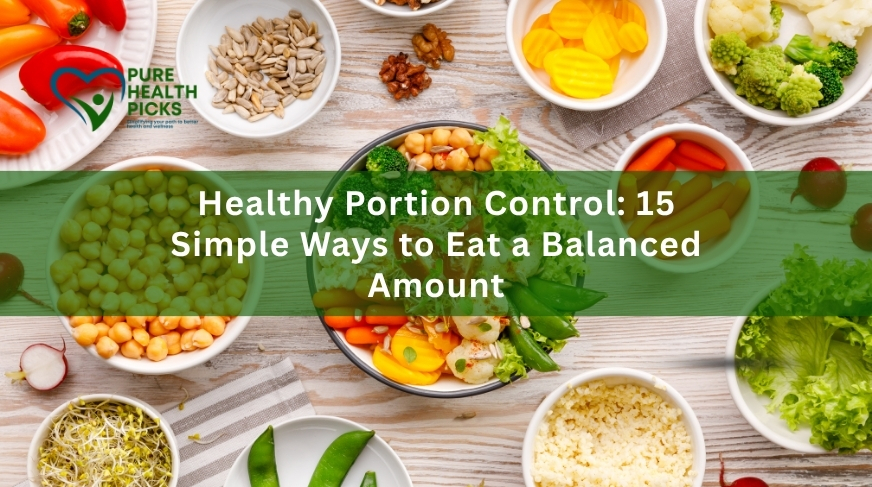
Healthy portion control means becoming more aware of how much food you serve and eat while still giving your body enough nutrition. It does not mean severely restricting food or constantly counting calories. A practical approach is to build balanced meals with vegetables and fruit, whole grains or other nutrient-rich carbohydrates, protein foods, and appropriate amounts of healthy fats. Eating slowly, using reasonable serving sizes, listening to hunger and fullness cues, and limiting distracted eating can also make portion awareness easier.
Table of Contents
- What Is Healthy Portion Control?
- Portion vs. Serving: What’s the Difference?
- Why Portion Awareness Matters
- 15 Healthy Portion Control Tips
- How to Build a Balanced Plate
- Portion Control Without Strict Dieting
- Common Portion Control Mistakes
- A Simple Portion Awareness Checklist
- Frequently Asked Questions
- Final Thoughts
What Is Healthy Portion Control?
Healthy portion control is about developing awareness of how much food you eat while making sure your meals remain nutritious and satisfying.
It isn’t about eating as little as possible.
It isn’t about eliminating your favorite foods.
And it doesn’t require weighing every ingredient.
Instead, portion awareness helps you recognize the difference between:
Eating enough to feel satisfied
and
Eating automatically beyond what your body needs.
The CDC notes that portion size is different from serving size and that larger portions can make it easier to consume more calories than intended. It recommends strategies such as using smaller plates, bowls, and glasses and checking serving information when appropriate.
Portion vs. Serving: What’s the Difference?
These two terms are often confused.
Serving Size
A serving size is a standardized amount used on a food label or nutrition information.
Portion Size
A portion is the amount of food you actually choose to eat at one time.
For example, a packaged food may list one serving as a particular amount, but you might choose to eat more or less than that.
Understanding this difference can make nutrition labels easier to interpret.
Why Healthy Portion Control Matters
Portion awareness can help you:
- Become more mindful of food intake
- Build balanced meals
- Reduce accidental overeating
- Recognize hunger and fullness cues
- Enjoy favorite foods without unnecessary restriction
- Improve meal planning
- Develop sustainable eating habits
But portion control should not become an obsession.
A healthy approach leaves room for flexibility, cultural foods, celebrations, restaurants, and personal preferences.
15 Healthy Portion Control Tips
1. Build a Balanced Plate
Instead of focusing only on how much you eat, first consider what is on your plate.
A practical meal can include:
- Vegetables
- Fruit
- Protein
- Whole grains or other nutrient-rich carbohydrates
- Healthy fats
The USDA MyPlate model encourages making about half your plate fruits and vegetables while including grains, protein foods, and dairy or fortified alternatives as appropriate. (myplate.gov)
This is a useful visual framework rather than a rigid rule.
2. Start With Vegetables
Vegetables can add volume, fiber, vitamins, minerals, and variety to meals.
Try filling a substantial part of your plate with:
- Broccoli
- Spinach
- Carrots
- Bell peppers
- Green beans
- Tomatoes
- Cauliflower
- Mixed vegetables
Choose different colors throughout the week.
3. Include a Protein Source
Protein is an important part of a balanced diet.
Options include:
- Eggs
- Fish
- Chicken
- Turkey
- Beans
- Lentils
- Tofu
- Greek yogurt
- Nuts and seeds
Your protein needs vary depending on age, activity level, and health circumstances.
4. Choose Fiber-Rich Carbohydrates
Carbohydrates don’t need to be eliminated to practice portion control.
Instead, choose nutrient-rich sources such as:
- Oats
- Brown rice
- Quinoa
- Whole-grain bread
- Potatoes
- Sweet potatoes
- Beans
- Whole-grain pasta
Pairing carbohydrates with protein, vegetables, and healthy fats can create a more balanced meal.
5. Use Smaller Plates When Helpful
Large plates can make ordinary portions appear smaller.
Using a slightly smaller plate may help some people naturally serve more appropriate amounts.
However, this isn’t a requirement.
The goal is awareness—not creating a new set of food rules.
6. Serve Food Before Sitting Down
Instead of eating directly from a large package, place your intended portion on a plate or bowl.
This makes it easier to see how much you’re eating.
It also reduces the tendency to continue eating simply because food remains in front of you.
7. Eat Slowly
Your body doesn’t always signal fullness immediately.
Eating more slowly gives you an opportunity to notice:
- Taste
- Texture
- Hunger
- Satisfaction
- Fullness
Put your fork down occasionally and take a moment between bites.
8. Reduce Distracted Eating
Try not to regularly eat while:
- Watching television
- Scrolling social media
- Working
- Driving
- Playing games
Distractions can make it harder to notice how much you’re eating or whether you’re still hungry.
Try making at least one meal each day screen-free.
9. Listen to Hunger and Fullness Cues
Before eating, ask:
Am I physically hungry?
During the meal, occasionally ask:
Am I still hungry, or am I eating because the food is available?
After eating:
Do I feel comfortably satisfied?
These questions can help develop greater awareness without requiring strict calorie counting.
10. Don’t Skip Meals to “Save Calories”
Skipping meals may leave some people extremely hungry later.
That can make it harder to recognize fullness and may encourage overeating.
Instead, develop a consistent eating pattern that works for your schedule and nutritional needs.
11. Portion Snacks Before Eating
Instead of eating directly from a large packet, place a reasonable amount into a bowl.
This makes the portion visible.
Better snack choices can include:
- Fruit
- Yogurt
- Nuts
- Vegetables with hummus
- Whole-grain foods
Your Healthy Snacking article can support this section through internal linking.
12. Be Mindful of Liquid Calories
Some beverages provide substantial calories without creating the same feeling of fullness as solid foods.
Common examples include:
- Sugary soft drinks
- Sweetened coffee beverages
- Energy drinks
- Certain flavored beverages
Making water your primary beverage can simplify portion and calorie awareness.
Link this section to Choose Water Over Soda.
13. Read Food Labels When Useful
Nutrition labels can help you understand:
- Serving size
- Calories
- Protein
- Fiber
- Added sugars
- Saturated fat
- Sodium
Remember that the label’s serving size is a reference amount—not necessarily the amount you personally should eat.
14. Practice Portion Awareness When Eating Out
Restaurant portions can be larger than what you would normally serve at home.
You can:
- Share a meal
- Save part for later
- Order a smaller option
- Add vegetables
- Choose water
- Stop eating when comfortably satisfied
You don’t need to avoid restaurants to eat mindfully.
15. Allow Flexibility
Healthy eating isn’t about perfect portions at every meal.
Birthdays, holidays, restaurants, family gatherings, and celebrations are part of life.
Enjoying a larger meal occasionally doesn’t undo an otherwise balanced eating pattern.
Look at your overall habits—not one meal.
How to Build a Balanced Plate
A simple visual framework can make portion control easier.
Half the Plate
Aim for a generous variety of vegetables and fruit.
One Quarter
Choose a protein source.
One Quarter
Choose whole grains or another nutrient-rich carbohydrate.
Add
A suitable amount of healthy fats or dairy/fortified alternatives according to your dietary needs.
This is broadly aligned with the MyPlate approach, which encourages fruits and vegetables to make up about half the plate. (myplate.gov)
Example
Lunch:
½ plate → mixed vegetables + salad
¼ plate → grilled chicken
¼ plate → brown rice
Add → small serving of avocado or olive-oil-based dressing
Water → primary beverage
Portion Control Without Strict Dieting
Healthy portion control should not feel like punishment.
Instead of:
❌ “I can’t eat this.”
Try:
✅ “How much will satisfy me?”
Instead of:
❌ “Carbohydrates are bad.”
Try:
✅ “What type and amount of carbohydrate fits this meal?”
Instead of:
❌ “I ruined my diet.”
Try:
✅ “One meal doesn’t define my overall eating pattern.”
This mindset can make healthy eating more sustainable.
Portion Control and Mindful Eating
Mindful eating means paying attention to your eating experience.
Before a meal:
Pause.
During the meal:
Notice.
After the meal:
Reflect.
Ask yourself:
- Was I hungry?
- Did I enjoy the meal?
- Did I eat too quickly?
- Am I comfortably satisfied?
- What could I change next time?
This turns eating into a conscious activity rather than an automatic behavior.
Common Portion Control Mistakes
Mistake 1: Eating as Little as Possible
Healthy portion control isn’t starvation.
Your body needs adequate energy and nutrients.
Mistake 2: Eliminating Entire Food Groups
Most people don’t need to eliminate carbohydrates, fats, or other major food groups simply to practice portion awareness.
Mistake 3: Relying Only on Small Plates
Plate size is only one strategy.
Food quality, hunger, meal balance, and eating speed also matter.
Mistake 4: Ignoring Hunger
Constantly ignoring genuine hunger isn’t a sustainable approach.
Mistake 5: Eating Directly From Packages
This can make it harder to see how much you’ve eaten.
Mistake 6: Obsessing Over Exact Numbers
Healthy eating doesn’t require perfect mathematical precision.
Mistake 7: Feeling Guilty About Food
Food isn’t morally “good” or “bad.”
Build a balanced pattern instead.
A Simple Portion Awareness Checklist
Build balanced plates
Include vegetables and fruit
Add a protein source
Choose fiber-rich foods
Serve snacks into bowls
Eat slowly
Reduce distractions
Drink water regularly
Pay attention to hunger cues
Notice fullness
Read food labels when useful
Be flexible
Avoid extreme restriction
A Practical Day of Healthy Portion Control
Breakfast
Oatmeal + berries + Greek yogurt + nuts
Mid-Morning
Fruit or yogurt if hungry
Lunch
Vegetables + grilled chicken + brown rice + water
Afternoon
Apple + small serving of nuts
Dinner
Vegetables + fish or beans + whole grain or potato
Evening
If hungry, choose a nutritious snack rather than eating simply because food is available.
The exact amount required varies considerably between individuals.
Age, body size, physical activity, appetite, health status, pregnancy, medications, and other factors can influence nutritional needs.
Frequently Asked Questions
What is healthy portion control?
Healthy portion control means becoming aware of how much food you serve and eat while still providing your body with adequate nutrition and energy. It emphasizes balance and mindfulness rather than severe restriction.
What is the easiest way to control portions?
Start by building balanced plates, serving food before eating, eating slowly, reducing distractions, and paying attention to hunger and fullness cues.
Does portion control mean eating less?
Not necessarily. It means eating an amount appropriate for your individual needs. Some people need larger portions because of greater energy requirements, while others may need less.
How can I control portions without counting calories?
Use visual plate proportions, eat slowly, serve snacks into bowls instead of eating from packages, include protein and fiber, and pay attention to hunger and fullness.
Should I use a smaller plate?
A smaller plate can be a useful visual strategy for some people, but it isn’t necessary. The goal is to develop overall awareness rather than rely on one trick.
How can I control portions at restaurants?
Consider smaller options, share meals, save part for later, add vegetables, and stop eating when comfortably satisfied. Restaurant meals can still be part of a balanced lifestyle.
Can I eat dessert while practicing portion control?
Yes. Healthy eating can include foods you enjoy. A balanced approach focuses on overall dietary patterns rather than eliminating every treat.
Is portion control good for weight management?
Portion awareness can help people manage overall energy intake, but weight is influenced by many factors. Nutrition, physical activity, sleep, genetics, medications, medical conditions, and other factors can all contribute.
If you’re concerned about weight or nutrition, a registered dietitian or qualified healthcare professional can provide individualized guidance.
What is the easiest way to practice healthy portion control?
Build balanced meals, serve food before eating, use reasonable plate portions, eat slowly, minimize distractions, include protein and fiber, drink water, and pay attention to hunger and fullness cues. Portion control should support adequate nutrition rather than encourage extreme restriction.
Healthy Portion Guide
| Meal Component | Practical Approach |
|---|---|
| Vegetables & Fruit | Make them a substantial part of the meal |
| Protein | Include a suitable source |
| Whole Grains/Carbs | Choose nutrient-rich options |
| Healthy Fats | Include appropriate amounts |
| Drinks | Make water your everyday default |
| Snacks | Serve a portion rather than eating from the package |
| Eating Speed | Slow down and check fullness |
Schema Suggestions
- Article Schema
- FAQPage Schema
- BreadcrumbList Schema
- HowTo Schema — Build a Balanced Plate
- Organization Schema
- WebPage Schema
Implementation note: Only implement FAQ/HowTo structured data when the content is visibly present on the page and complies with current search-engine guidelines.
Internal Linking Opportunities
This article should become part of the Nutrition & Healthy Eating cluster.
Naturally link to:
- Healthy Snacking
- Healthy Breakfast
- Eat More Fiber
- Power of Whole Foods
- Choose Water Over Soda
- Always Feeling Hungry?
- Build Healthy Habits
- Wellness Every Day
- Healthy Digestion
- Healthy Heart
- Stay Active
Recommended Content Cluster
Healthy Portion Control
↓
Healthy Snacking
↓
Always Feeling Hungry?
↓
Eat More Fiber
↓
Power of Whole Foods
↓
Healthy Breakfast
↓
Choose Water Over Soda
This gives Pure Health Picks a stronger semantic nutrition → satiety → food quality → hydration → healthy lifestyle pathway.
External Authority Sources
For stronger E-E-A-T and evidence-based nutrition content, prioritize:
- USDA MyPlate — balanced meals and food groups (myplate.gov)
- Centers for Disease Control and Prevention (CDC) — portion size and healthy eating (cdc.gov)
- National Institutes of Health (NIH) — nutrition and healthy eating research
- National Institute of Diabetes and Digestive and Kidney Diseases (NIDDK) — healthy eating and weight management
- Academy of Nutrition and Dietetics — evidence-based nutrition guidance
Conclusion
Healthy portion control isn’t about eating as little as possible.
It’s about learning to recognize appropriate amounts, building balanced meals, eating mindfully, and giving your body the nutrition it needs.
Start by making your plate more balanced.
Add vegetables.
Include protein.
Choose fiber-rich carbohydrates.
Drink water.
Eat slowly.
Put the package away before snacking.
Pay attention to hunger and fullness.
And give yourself flexibility.
You don’t need perfect portions at every meal to have a healthy diet. What matters most is the overall pattern of your eating habits.
Healthy eating should nourish your body without making every meal stressful.
Eat with awareness. Choose balance. Nourish your body.
Call to Action
At Pure Health Picks, we make healthy eating easier to understand with practical nutrition guides, wellness tips, fitness resources, mental wellness content, skincare information, and honest health product reviews. Explore our growing library to discover simple, evidence-informed ways to eat better, build healthier habits, and make smarter wellness choices every day.