



 October 13, 2026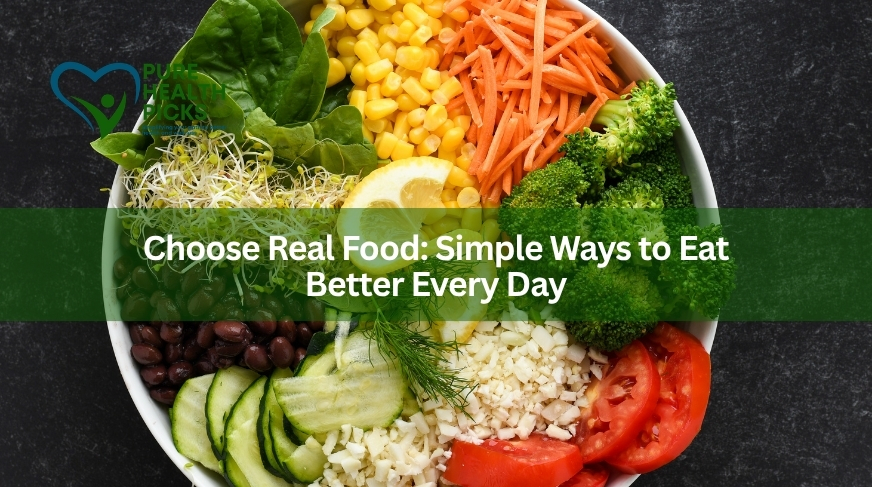
Healthy eating does not need to involve expensive ingredients, strict food rules, or complicated recipes. One practical approach is to choose more foods that retain their natural nutritional value and rely less often on products high in added sugars, sodium, or refined carbohydrates.
The idea behind choosing real food is simple: build meals around vegetables, fruits, legumes, whole grains, nuts, seeds, and suitable protein sources. You can still enjoy convenience foods and favourite treats. The goal is to develop an eating pattern that is balanced, enjoyable, affordable, and realistic over time.
What Does Choosing Real Food Mean?
“Real food” is a popular expression rather than a formal nutritional category. It generally refers to foods that are minimally processed or prepared with relatively few added ingredients.
Examples include fresh fruit, vegetables, eggs, beans, lentils, plain oats, nuts, fish, and whole grains. Frozen vegetables, canned beans, plain yogurt, and other convenient products can also fit into a healthy eating pattern.
Processing alone does not determine whether a food is nutritious. Freezing vegetables, pasteurizing milk, or cooking beans can improve convenience, safety, and usability. Some processed foods provide important nutrients, while others contain substantial amounts of added sugar or sodium.
The better question is not simply whether a food is processed, but how it contributes to your overall diet.
Why Choose More Whole and Minimally Processed Foods?
1. Improve overall nutrient intake
Vegetables, fruits, whole grains, legumes, nuts, and seeds provide combinations of vitamins, minerals, fiber, and other beneficial compounds. Including a variety of these foods helps you obtain a broader range of nutrients.
2. Support digestive health
Many plant foods contain dietary fiber, which contributes to bowel regularity and supports fullness. Certain fibers are also used by gut microorganisms. Increasing fiber gradually and drinking adequate fluids can help you adjust more comfortably.
3. Build more satisfying meals
Combining fiber-rich carbohydrates with protein and healthy fats can make meals more satisfying. For example, oats with nuts and fruit, or lentils with vegetables and whole grains, provides a combination of nutrients rather than relying on one food group.
4. Make added sugar and sodium easier to manage
Preparing more meals from basic ingredients can give you greater control over how much salt, sugar, and other ingredients you add. Packaged foods can still be useful; nutrition labels help you compare options.
5. Create sustainable habits
A healthy diet is not built in one day. Repeating manageable choices—such as adding vegetables to lunch or keeping fruit available—can make balanced eating easier to maintain.
Ten Simple Ways to Choose Real Food
1. Start with one meal
Choose one meal to improve first. You might replace a sugary breakfast cereal with oats, fruit, and plain yogurt, or add vegetables and beans to lunch.
2. Add colour to your plate
Use different coloured vegetables and fruits across the week. Different colours can indicate different plant compounds, although colour alone does not guarantee nutritional quality.
3. Include protein sources
Choose from eggs, fish, poultry, dairy products, tofu, beans, lentils, nuts, seeds, or other suitable options. Your needs depend on age, activity, health, and dietary preferences.
4. Choose whole grains more often
Try oats, brown rice, barley, or whole-wheat products. Compare ingredient lists because terms such as “multigrain” do not necessarily mean a product is made primarily from whole grains.
5. Keep fruit easy to reach
Wash fruit ahead of time and keep convenient options available. Whole fruit is generally preferable to juice when your goal is to increase fiber.
6. Prepare ingredients in advance
Cook a batch of beans, lentils, or whole grains, and wash or chop vegetables for upcoming meals. Preparation reduces the effort required to make balanced choices when you are busy.
7. Read nutrition labels
Compare products for added sugars, sodium, fiber, saturated fat, and serving size. Look at the full nutrition information instead of relying only on claims such as “natural” or “healthy.”
8. Make water your usual drink
Water is a useful everyday choice. If you regularly consume sweetened beverages, replacing some of them with water can reduce added sugar intake.
9. Plan affordable meals
Seasonal produce, dried legumes, oats, frozen vegetables, and appropriately selected canned foods can help control grocery costs. A nutritious meal does not need premium ingredients.
10. Leave room for enjoyment
Avoid treating foods as morally good or bad. A flexible eating pattern can include cultural dishes, favourite snacks, and occasional treats while emphasizing nutritious choices most of the time.
A Simple Real-Food Meal Plan
Use this example as inspiration rather than a rigid prescription.
- Breakfast: Oats with fruit, nuts, or plain yogurt.
- Lunch: Lentils or beans with vegetables and a whole grain.
- Snack: Fruit, yogurt, or a small portion of nuts.
- Dinner: Vegetables with fish, eggs, tofu, beans, or another protein source and a suitable carbohydrate.
- Drinks: Water or other unsweetened options according to preference and individual needs.
Adapt the ingredients to your culture, budget, allergies, and nutritional requirements. Rice and dal, vegetable-rich curries, beans, seasonal fruit, and whole-grain rotis can all fit into a balanced eating pattern.
Common Mistakes to Avoid
Assuming fresh is always better: Frozen vegetables and some canned foods can be nutritious and practical.
Buying products because of front-label claims: “Natural,” “multigrain,” and “organic” do not automatically mean a product is nutritionally superior.
Eliminating entire food groups without a reason: Restrictive rules may make it harder to obtain a balanced range of nutrients. Special diets should be planned around individual needs.
Changing everything overnight: Too many changes at once can be expensive and difficult to sustain. Start with a few manageable habits.
Ignoring food safety: Wash produce appropriately, store perishable foods safely, and cook foods to suitable temperatures.
Frequently Asked Questions
What is the real-food diet?
It is an informal term for an eating pattern that emphasizes vegetables, fruits, whole grains, legumes, nuts, seeds, and other nutritious foods, often with fewer highly processed products. There is no single official definition.
Are all processed foods unhealthy?
No. Processing includes freezing, cooking, pasteurization, canning, and other methods. Nutritional quality depends on the food, its ingredients, and how it fits into the overall diet.
Is real food more expensive?
Not necessarily. Beans, lentils, oats, seasonal produce, frozen vegetables, and some canned foods can be economical. Meal planning and reducing food waste can also help.
How do I start eating healthier today?
Choose one achievable action, such as adding fruit to breakfast, including vegetables at lunch, or preparing a simple bean-based meal. Build from there.
Can I eat real food if I have little time to cook?
Yes. Frozen vegetables, canned beans, plain yogurt, prewashed produce, and simple whole-grain options can make balanced meals quicker to prepare.
Choose Real Food, One Meal at a Time
Better nutrition is not about perfection. It is about building a pattern of choices that gives your body a useful mix of nutrients while fitting your daily life.
Start with one meal, choose ingredients you enjoy, and repeat the habits that work for you. Over time, small changes can become a practical foundation for long-term wellness.
Choose real food. Make balanced choices. Let wellness begin with your next meal.
Pure Health Picks provides educational wellness content and does not replace individualized advice from a qualified healthcare professional or registered dietitian.